
The C:\User Data in Windows Forensics
March 12th, 2026 by Oleg AfoninThis article concludes our series on Windows forensic artefacts and the role they play in real-world investigations. Over the past several weeks, we looked at evidence sources that help investigators understand activity at the system level, from Windows Event Logs and the Windows Registry to file system traces stored under C:\Windows and C:\ProgramData. Those artefacts are indispensable when reconstructing the broader picture: system startup and shutdown, service activity, software installation, persistence mechanisms, and signs of compromise affecting the machine as a whole. Yet system-wide telemetry has an obvious limitation. It can tell us that something happened, but not always who was behind it. This is where the focus shifts from the operating system to the individual user.
Windows File System Artefacts Under C:\ProgramData
March 5th, 2026 by Oleg AfoninThis guide continues our ongoing series exploring Windows digital artefacts and their practical value during an investigation. Here, we turn our attention to the specific set of files located under the root path %ProgramData% (commonly C:\ProgramData\) and its subfolders. Unlike standard user profile folders, this directory typically houses system-wide data, shared application configurations, and background service caches that apply to the system as a whole. For investigators, this path offers a system-level perspective. Analyzing it can uncover historical activity, revealing events from background file transfers and software installations to Wi-Fi connections and security tool detections.
Investigating Windows File System Artifacts Under C:\Windows
March 3rd, 2026 by Oleg AfoninThis guide continues our ongoing series exploring digital artifacts found on Windows computers and their practical meaning during an investigation. With each new topic, the puzzle becomes more complex because these traces rarely exist in isolation. Modern forensic best practices rely heavily on cross-checking different types of artifacts against one another. By connecting these dots, investigators do more than just establish isolated facts – they build a solid, reliable conclusion that can stand up in court.
USB Device Forensics on Windows 10 and 11
February 25th, 2026 by Oleg AfoninWith massive external hard drives and smartphones everywhere, the USB interface continues to be a major channel for data theft and malware infections. For anyone working in digital forensics and incident response, building a solid timeline of when a USB device was plugged in, used, and removed is often essential. Whether you are investigating a departing employee who might have copied sensitive intellectual property to a thumb drive, or tracing a ransomware outbreak, the answers frequently involve external storage.
Forensic Analysis of Windows 10 and 11 Event Logs
February 18th, 2026 by Oleg AfoninThe discipline of digital forensics and incident response relies fundamentally on the persistent, systemic traces left by both legitimate users and malicious actors. The Windows Event Log system serves as a primary chronological record of operating system activity, capturing security events, application behaviors, service and driver activity, and user authentication telemetry. Due to the immense volume of background events generated by Windows 10 and Windows 11, isolating forensically relevant artifacts is a highly specialized task. A comprehensive understanding of this logging mechanism is often decisive when reconstructing an incident timeline.
Investigating Windows Registry
February 13th, 2026 by Oleg AfoninThe Windows Registry remains one of the most information-dense repositories for reconstructing system activity and user behavior. Far more than a configuration database, it serves as a critical historical record of execution, data access, and persistence mechanisms across Windows 10 and 11. While automated forensic tools are essential for extracting and parsing this data, the correct interpretation of the results remains the responsibility of the investigator. This article focuses on the Registry keys that possess distinct forensic significance. We will move beyond the standard enumeration found in legacy guides to establish the specific links between technical artifacts and their value in an investigation, distinguishing between actionable evidence and system noise.
Live System Analysis: Mitigating Interference from Antivirus Tools
February 6th, 2026 by Oleg AfoninWindows Defender and forensic triage tools often find themselves at odds. While endpoint protection is designed to lock down a system against unauthorized access, forensic utilities must access everything, including locked system files, to secure evidence. This conflict creates immediate operational risks during live analysis. Modern antivirus engines with aggressive heuristics may flag legitimate forensic binaries as malware, terminating the acquisition process or quarantining the tool itself. Beyond simple blocking, active background scanning introduces significant I/O latency and threatens the integrity of the evidence; the AV might delete or modify a suspicious file, such as a malware payload, moments before it can be preserved.
Web Browser Forensics in Digital Triage
January 14th, 2026 by Oleg AfoninIn modern investigations, the web browser is no longer just an application – it is a comprehensive journal of a suspect’s life, intentions, and habits. While end-to-end encrypted clouds and locked smartphones often hit a dead end, the desktop web browser remains one of the most significant grounds for digital evidence, often serving as the silent witness that helps solve a case.
Browser Forensics in 2026: App-Bound Encryption and Live Triage
January 13th, 2026 by Oleg AfoninSince the introduction of DPAPI in Windows 2000, the forensic workflow for recovering browser credentials was straightforward: isolate the computer, image the drive, and extract the browser profile. In that era, having the user’s Windows password was enough to decrypt everything offline. Today, that assumption is outdated. With the shift to App-Bound Encryption, Google and Microsoft effectively broke the “dead box” workflow for their browsers. While stored passwords remain critical evidence, accessing them now requires investigators to act before they pull the plug.
The Cloud Gap: Forensic Triage vs. Disk Imaging in the Age of On-Demand Sync
January 8th, 2026 by Oleg AfoninFor decades, the forensic “gold standard” was straightforward: isolate the computer, pull the plug, and image the drive. In that era, what you saw on the screen was physically present on the magnetic platters, waiting to be extracted bit by bit. Today, that assumption is not just outdated; it is plain wrong. The rapid adoption of cloud storage services, partial on-demand synchronization, and full-disk encryption has fundamentally broken the traditional dead-box workflow, turning the simple act of powering down a suspect’s computer into a potential destroyer of evidence.
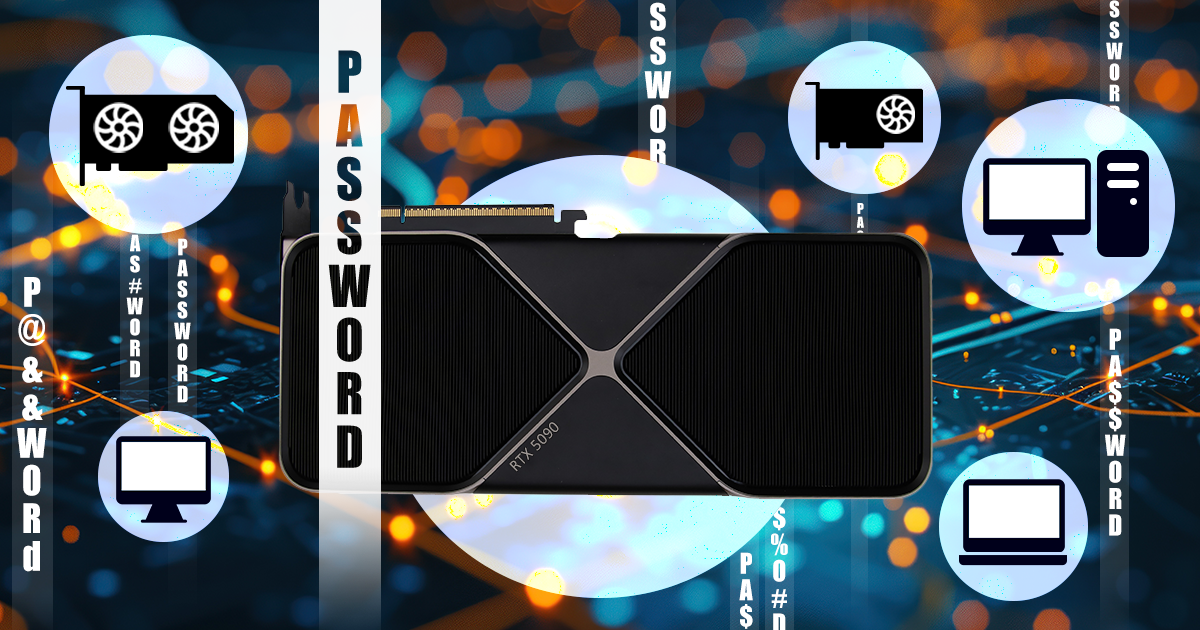

- Elcomsoft Distributed Password Recovery goes 64-bit, adds NVIDIA Blackwell support26 March, 2026
- iOS Forensic Toolkit 9.0: full unlocking and perfect acquisition support for iPhone 6/6 Plus and other Apple A8/A8X devices11 February, 2026
- Elcomsoft Quick Triage30 December, 2025
- Introducing free forensic tools12 December, 2025
- Elcomsoft System Recovery 8.36 adds Windows Server 2025 support, BitLocker key exporting, and enhanced SRUM analysis14 November, 2025