
Live System Analysis: Mitigating Interference from Antivirus Tools
February 6th, 2026 by Oleg AfoninWindows Defender and forensic triage tools often find themselves at odds. While endpoint protection is designed to lock down a system against unauthorized access, forensic utilities must access everything, including locked system files, to secure evidence. This conflict creates immediate operational risks during live analysis. Modern antivirus engines with aggressive heuristics may flag legitimate forensic binaries as malware, terminating the acquisition process or quarantining the tool itself. Beyond simple blocking, active background scanning introduces significant I/O latency and threatens the integrity of the evidence; the AV might delete or modify a suspicious file, such as a malware payload, moments before it can be preserved.
Web Browser Forensics in Digital Triage
January 14th, 2026 by Oleg AfoninIn modern investigations, the web browser is no longer just an application – it is a comprehensive journal of a suspect’s life, intentions, and habits. While end-to-end encrypted clouds and locked smartphones often hit a dead end, the desktop web browser remains one of the most significant grounds for digital evidence, often serving as the silent witness that helps solve a case.
Browser Forensics in 2026: App-Bound Encryption and Live Triage
January 13th, 2026 by Oleg AfoninSince the introduction of DPAPI in Windows 2000, the forensic workflow for recovering browser credentials was straightforward: isolate the computer, image the drive, and extract the browser profile. In that era, having the user’s Windows password was enough to decrypt everything offline. Today, that assumption is outdated. With the shift to App-Bound Encryption, Google and Microsoft effectively broke the “dead box” workflow for their browsers. While stored passwords remain critical evidence, accessing them now requires investigators to act before they pull the plug.
The Cloud Gap: Forensic Triage vs. Disk Imaging in the Age of On-Demand Sync
January 8th, 2026 by Oleg AfoninFor decades, the forensic “gold standard” was straightforward: isolate the computer, pull the plug, and image the drive. In that era, what you saw on the screen was physically present on the magnetic platters, waiting to be extracted bit by bit. Today, that assumption is not just outdated; it is plain wrong. The rapid adoption of cloud storage services, partial on-demand synchronization, and full-disk encryption has fundamentally broken the traditional dead-box workflow, turning the simple act of powering down a suspect’s computer into a potential destroyer of evidence.
The Shift from Disk Imaging to Digital Triage
January 5th, 2026 by Oleg AfoninModern digital forensic labs are facing a crisis of scale. When a search warrant results in the seizure of a dozen laptops, several servers, and a mountain of external drives, the traditional forensic workflow – bit-for-bit imaging followed by exhaustive analysis – becomes a liability rather than an asset. This is precisely where our new tool, Elcomsoft Quick Triage, enters the picture. Designed as a solution for rapid, in-field data acquisition, EQT allows investigators to bypass the “imaging bottleneck” and identify the “smoking gun” in minutes rather than months.
Introducing Elcomsoft Quick Triage
December 30th, 2025 by Oleg AfoninWe’re expanding our product line with a new tool: Elcomsoft Quick Triage. With this release, we are expanding into an area we had not previously covered – digital forensic triage. EQT is designed to address a very specific need that arises at the earliest stages of an investigation, when time is limited and quick decisions matter. The new tool is not intended to replace full-featured forensic platforms or in-depth analysis. Instead, it focuses on a different phase of the workflow: fast identification, collection, and review of the most relevant evidence before committing resources to a complete examination.

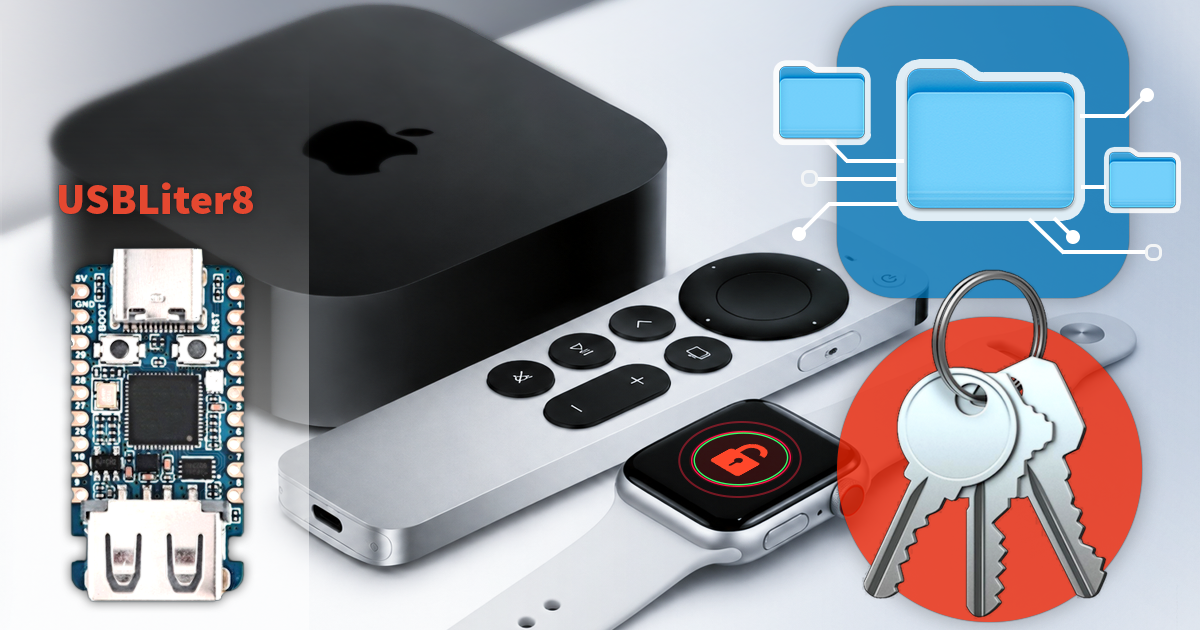
- iOS Forensic Toolkit 10.11: bootloader extraction for Apple Watch Series 4 and 5, Apple TV 4K 2nd Gen21 September, 2026
- Elcomsoft Quick Triage 2.2 adds a timeline, a plugin system, and file system snapshots3 September, 2026
- Elcomsoft System Recovery 8.38: Built-In BitLocker TPM Exploit Library, Browser Artefact Extraction, and Imaging Checksums26 August, 2026
- EIFT Firewall: a new free tool for controlled agent sideloading3 August, 2026
- Elcomsoft Phone Breaker 11.04: more reliable downloads from iCloud Drive30 July, 2026